

WhatsApp is the most popular messaging mobile application globally, boasting over 2 billion monthly users. According to statistics, at least one in every four people worldwide is using WhatsApp today.
But, with such immense popularity comes a tremendous burden, that are scams. While people use the app to chat with friends and family, many scammers access the platform to carry out wrongful acts like stealing money. Here, we explore the 13 most common WhatsApp scams and how to spot and avoid them.
Top 13 WhatsApp Scams: Quick List
In a hurry? Here are some of the common forms of online scams that are currently taking place on WhatsApp:
- Verification code scams: Scammers try to acquire a verification code sent to your device.
- Crypto scams: Also known as pig butchering scams. Criminals promise you high-returns if you invest in cryptocurrencies.
- Job scams: You get a job offer on your WhatsApp, which is too good to be true.
- Whatsapp gold version scams: This scam contains promises of a premium membership to the WhatsApp Gold version with perks and benefits.
- Virus and malware scams: Scammers send you an attachment (malware-infused) and compel you to click on it.
- Lottery and freebie giveaway scams: Prey on your desire to win huge prizes and lotteries, but you buy fake tickets or betting systems and tips.
- WhatsApp dating scams: Swindlers play on your need for love and company to extort money from you.
- Coupon and gift cards: Criminals promise you gift cards, coupons, and shopping vouchers for completing simple tasks.
- Impersonation scams: These involve getting messages from random numbers that identify them as your close ones. They say they are in danger and need money.
- Tech support scams: Scammers try to obtain your money and personal information by claiming to be tech support agents of reputable companies.
- Call forwarding scams: These scams trick you into forwarding your calls from your phone to the fraudsters phone numbers.
- WhatsApp e-commerce scams: Product sellers try to take you from an e-commerce website to WhatsApp.
- Charity scams: Scammers take money from you as charity by posing they will donate it to needy people.
13 Common WhatsApp Scams: Detailed List
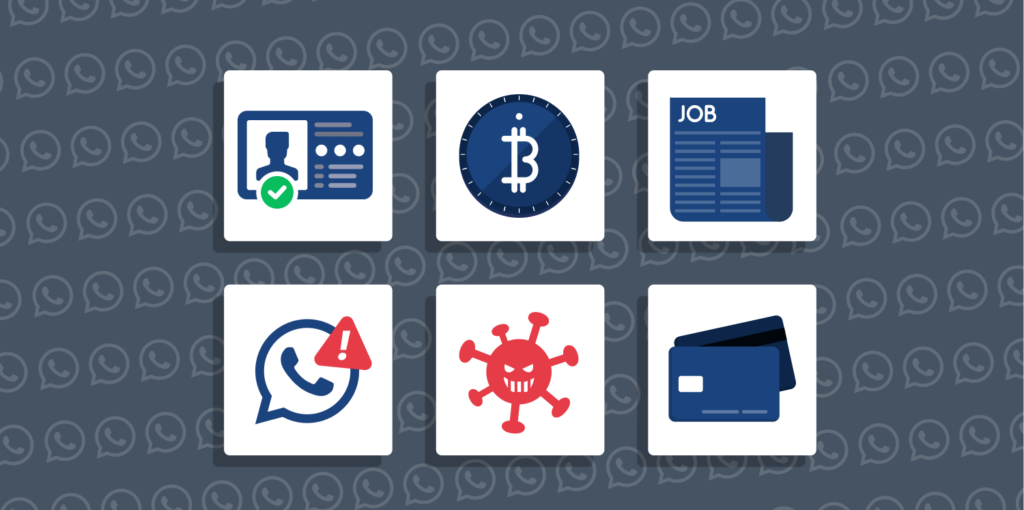
All scams on WhatsApp have similar goals and tricks. They want to obtain your personal information, steal your money, install malicious malware onto your device, or even pretend to be you through identity theft.
Let’s discuss these scams in detail below:
1. Verification Code Scams
One of the most common scams is when criminals try to log in to your accounts but need your verification code. The verification code is a four or six-digit number that you receive in your message to log in, complete a transaction, or change your password. So, if you suddenly receive a 6-digit verification code from nowhere, you could be a scam target.
But how exactly does this verification code scam work? An alleged friend or close relative sends you a message apologizing that they accidentally sent a verification code to your number. They will request that you send them the verification code you received.
What you should do about it is to realize that trick and stop it before it even starts. If you ever receive a verification code from WhatsApp and know that you haven’t logged in to your account on any other device, you should raise your eyebrows. Someone could be targeting you in a scam.
2. Crypto Scams
Cryptocurrency is a lucrative investment for many people. The booming business has its returns but is also a target of scammers. Many scammers are trying to defraud your hard-earned treasures through the WhatsApp social media platform.
Crypto scams involve online predators picking on their victims who are looking for ways to make quick money. They then drive the users to WhatsApp, where they profess how their friends and relatives are cashing in big money in some cryptocurrency deal.
If you want in, you automatically become a victim, and they give you a trading site on which you’re supposed to deposit money. Once you do it, you automatically lose the money, and the scammer blocks you. You will never hear about the crypto deal from them again.
Sometimes, the scammer adds you to WhatsApp groups with hundreds of fake cryptocurrency enthusiasts. All the members pretend to be enjoying the benefits they get from their investments. The guaranteed return investments and excellent opportunities will lure you into depositing.
Stay safe by learning these pig butchers’ tricks and avoiding their traps. Avoid any overhyped investments with guaranteed returns. Research your potential investments and make sure you’re doing them right. Also, check the companies and exchanges you use for trading before depositing your money.
3. Job Scams
Like the other scams, job scams promise you lucrative dream employment opportunities but only end up defrauding your money. These scammers typically come to you as respectable representatives of big companies and corporations.
They will offer you jobs with wages you cannot resist. For example, they will tell you that you will get paid even for your off-hours and that you can get unlimited vacation. But to perpetrate the scam, they will try to get you to click on dubious links to download malware or steal your data, or to ask for a token money to get the job.
Fortunately, you can avoid it by refusing any job offer you get from companies you’ve never applied to. Also, do not click on any suspicious links on WhatsApp. Remember to avoid offers that sound too good to be true. Then, once you notice that you’re dealing with a scammer, pull back, mark the user, and block them.
4. WhatsApp Gold Version Scams
Unlike money, gold never loses value and retains its purity and high standards throughout the millennia. This explains why most products have a gold membership version. A gold membership means that the product is of the best quality.
But the WhatsApp gold scammers know this and try to entice you to subscribe to premium versions of WhatsApp or other applications.
The fraudsters send you messages aimed at smishing or phishing your data. The messages try to convince you to honor an invitation to upgrade your WhatsApp Gold version. The idea is to lie to you and tell you that there is a premium version of WhatsApp with fabulous functionalities and features.
The fraudsters tell you that only VIPs have access to this membership. But when you click the link to upgrade to the new WhatsApp application, you’ll be redirected to a fake website that looks almost exactly like the world page. Then, they will lead you to key in your essential information.
The best you can do about WhatsApp’s gold-standard scams is to appreciate that the current version of WhatsApp is the best that the Meta company has. Do not try to be lured into making an exclusive upgrade.
5. Virus and Malware Scams
Some of the WhatsApp scams are solely dedicated to making you download viruses and malware onto your device. Their idea is very straightforward, and they are not trying to use sophisticated social engineering tricks; all they want you to do is click their malicious links.
The hackers will send you messages with fake software downloads and updates. They might also send links to websites or random messages that contain malicious attachments. Sometimes, they could even ask you a simple question like “Are you in this video?”
Many people have fallen into a trick where they receive a message asking, “Did you see what this guy said about you?”
And if you click the video or the link provided, you will send the virus link to all your contacts. We recommend that you avoid clicking on suspicious links. You cannot trust any message with a suspicious link, even from a close relative.
And if a friend sends you a suspicious message, try reaching out to them through another messaging app to confirm that they know they are sending malicious messages to people.
6. Lottery and Freebie Giveaway Scams
Sweepstakes and lotteries allow you to win prizes, creating a lot of desire to win. But, out there, many scammers have fake lotteries that trick people with the probability of winning great prizes. They use the financial situations of potential victims to lure them into hoaxes only to fleece them off their hard-earned money.
WhatsApp lottery scammers send you messages, sometimes tricking you into thinking you are the winner of a lottery prize. Have you seen those pop-up ads on websites that lie to you that you’ve won an iPhone? Well, it’s the same trick, except this one is in the form of WhatsApp messages.
The cons then include impersonating reputable betting companies to give them a sense of legitimacy. But if you dare follow the link they send, they will ask for some sensitive data, including your bank details.
The scam varies in many ways because people are sometimes invited to buy lottery tickets. They could ask for your payment to process the tickets, but never deliver. Or they could get you to submit your card information, and then they drain more money from your account than the ticket costs.
But you can escape all these tricks if you know the scammers’ tactics. Do not expect to win money from a lottery you never participated in. Never participate in any lottery or promotion unless you’ve done enough research about its legitimacy. Only buy lottery tickets from the official company website. Do not trust any WhatsApp links leading you to purchase lottery giveaways.
7. WhatsApp Dating Scams
Swindlers are not on Tinder alone—they are also on WhatsApp. As long as people look for love online, scammers will try to prey on their innocence. The scammers capitalize on your need to search for love and loneliness and then trick you of your money.
When they get you going with their conversation, they will push you to move on to other messaging applications. Of course, WhatsApp is one of the go-to apps because of its fantastic privacy protocols.
When they drag you to WhatsApp, they will then start extorting money from you. Sometimes, they might request you for private pictures and nudes just to have enough material to blackmail you. They may even try asking for your private information, such as your credit card information, or installing malware on your device.
Dealing with dating scams can be challenging, especially if you are out to beat loneliness and find love. The first step is to recognize any dating scam before it even starts. Do background checks for people with whom you share private information.
Start by determining if they have an online presence outside WhatsApp and dating apps. See if they have content on other platforms like Facebook, Twitter(X), Instagram, and TikTok. Confirm that they are real people and not bots or scammers.
If the people you are talking with are not authentic, you have no business messaging them back on WhatsApp.
Do not release or send sensitive data, money, or private pictures to strangers. Break your ties, especially if they profess their undying love to you without committing to conforming to their real identity.
8. Coupon and Gift Card Scams
Coupons and gift cards can sometimes be exciting to receive. So, scammers want to con their way into the bank accounts of innocent WhatsApp users.
But how exactly does the coupon scam work? You receive a random WhatsApp message asking you to complete a survey, after which you will get a reward or gift card. You may even forward it to your friends and family if you are not suspect.
You may not know that the message you are forwarding is a scam. None of the gift cards or codes will work anywhere, and you will receive many malware downloads. Sometimes, you could even lose money through identity theft and phishing.
9. Impersonation Scams
Also known as the “mom and dad scams,” the impersonation involves social engineers who prey on your affection for your family.
Scammers pretend to be your family member. For instance, your ‘son or daughter’ could claim they are messaging you from a friend’s account because their phone is damaged. Then, they will even claim they don’t have access to their device’s apps, including their money or banking app. So, they will desperately plead for funds through another account to offset their bills.
Before you reply, make sure you contact the person you are dealing with directly on their real account. Direct communication will help you avoid losing money to the criminal.
10. Tech Support Scams
Here, scammers pretend to be tech support or representatives of companies and ask you to verify your identity. This goes across all services, including WhatsApp customer service.
The scammers tell you to send them the code sent to your number to verify your identity, to make your account more secure. But the moment you give out your verification codes and your personal information, that’s how you will lose your account.
However, you can avoid such scams by never sharing any information that could identify you personally. Unless you start a conversation with the WhatsApp customer care agents, never trust anyone claiming to be an agent.
11. Call Forwarding Scams
Like the vishing scam, the call-forwarding scam proceeds in the form of a random phone call. Conversely, the fraudster will persuade you to call a different number. Once you make that call, you automatically forward your call from your number to the scammer’s phone number.
This means they can quickly sign in to your WhatsApp accounts or even get back details by receiving the one-time passwords via phone call. In short, this call-forwarding scammer will try to receive your calls on your behalf to get the verification code to their phones, drain your bank accounts, or steal your personal information.
But you can avoid the call-forwarding scam by remaining vigilant. Never call any number that begins with **67* or anything related to *405*. This is usually a service request to your provider to channel and forward your calls to a different number. And if you ever suspect someone is trying to hack your WhatsApp account, reset your passwords and settings immediately.
12. WhatsApp E-commerce Scams
Some scammers will use e-commerce sites to steal your money. They will simply go to e-commerce websites and try to trick you from there. When you’re trying to purchase items on an online shopping website, these scammers will pretend to be verified sellers but instead want to shift your conversation with them to WhatsApp.
When you go to WhatsApp, they will need you to send them your money so they can ship your product, but instead, they will block you once they receive the funds.
You can protect yourself by ensuring you are only purchasing items from legitimate e-commerce websites. Also, check whether the website verifies buyers and sellers and uses protected payment methods only.
Avoid sellers who try to convince you to make payments through any other channel outside the protected method. Also, never send money directly to personal bank accounts; use e-commerce’s verified, protected payment systems.
NOTE: Scammers are not the only random strangers who send you messages on WhatsApp. They can also be your family members and friends who forward phishing messages to you without knowing they come from scammers. Just because you know the person sending you a link doesn’t mean the link or the fraudulent download site is legitimate.
13. Charity Scams
These scams typically involve activities where fraudsters contact people asking for money to donate to a good deed, such as charity or non-profit organizations.
While donating to charities is a nice act, you should confirm the legality of the message you’re receiving on your phone, as none of the legitimate organizations will text you on WhatsApp. It’s more likely that the person will get money from you and flee within seconds.
WhatsApp Scams on Other Platforms
Unfortunately, WhatsApp scams are not limited to the application. WhatsApp has now become synonymous with secure and private communication, making it the perfect platform for both regular people and scammers to communicate securely.
These scammers find it convenient for their email phishing campaigns and other forms of scams. That’s why even top brands like Amazon and Geek Squad have scammers who take people from those platforms to WhatsApp. Some of the WhatsApp scammers redirect innocent users to malicious web pages that download malware and spyware onto their devices.
But you can protect yourself by understanding how these scams work and avoiding them. If, for instance, you receive an email from a reputable company, but the message includes many grammatical mistakes and odd formats, then it should raise your eyebrows. Do not open such an email or message; don’t try to click on any of the links therein.
You should also contact the company or bank through their official channels to confirm whether the email is legit. Make sure you also have antivirus software with Anti-phishing protection to keep your device safe.
How to Spot a WhatsApp Scam
Protecting yourself from WhatsApp scammers is never easy, but you can increase your odds by learning how to spot them. Here are some of the early warning signs of WhatsApp scams:
- Strange phone numbers: If you receive a message from an unknown number, treat it with suspicion.
- Spelling mistakes grammatical errors: Legitimate companies have enough personnel to check the grammar of messages they send to their clients. But most scammers write their content hastily. So, if you receive texts with many spelling errors, raise your eyebrow.
- Requests for money: If anyone texts you to send them money urgently, do not. Call them first if the number is in personating a relative or a friend.
- Generic greetings and salutations: If you get a message with ‘Hi Mum,’ ‘Hi Dad,’ or ‘Hi friend’ from an unknown number, it could be from a con artist trying his luck with a large pool of potential victims. Call the person this fraudster is pretending to be and confirm with them before sending any money.
- Suspicious URLs and attachments: If you receive a message from an unknown number containing any attachment or link, avoid tapping on it. Mostly, these links and attachments contain malware.
- Random verification codes: If you receive a message from a stranger requesting you to send a verification code, you should treat it as a scam.
- Ridiculous offers: If a WhatsApp user contacts you about offers and giveaways that sound too good to be true, it’s probably because they are.
- Vague replies: If a WhatsApp contact provides you with vague replies about the offers they make, they could be lying.
Actions to Take If You Fall Victim to a WhatsApp Scam

Fraudsters are wise people who use sophisticated methods to get to you. So, if you ever fall into the hands of a scammer, do not think low of yourself, as it can happen even to the best among us. Remember that scammers have been able to defraud even the most intelligent organizations in the world.
But at least you should be able to learn from your past and avoid the scams next time. Now that you know what WhatsApp scammers are trying to do and their methods, you can quickly identify them.
Here are the things you should do when you become a victim of a WhatsApp scam:
- First, relax and accept that even the most intelligent person can be scammed. Gather your psychological strength and be ready to move ahead.
- Report the number of scammers to WhatsApp.
- If you click suspicious links or download attachments, notify your WhatsApp contacts about the potential risk. Tell them not to click on any suspicious messages sent through your account. Do the same if you have lost access to your WhatsApp.
- It’s time to prepare for the future by beefing up your cyber security. Start with a strong password and a password manager, and use the two-factor authentication system. You may also need antivirus software to help clean your device of all the malicious viruses and malware installed. Also, make sure to use a quality VPN like ExtremeVPN to secure your traffic so hackers can’t identify you.
FAQs